Humanizing Risk Management and the Nervous System

Guest post by Amy Leo, creator of the Mindful Money

Risk management. Cold, mechanical, academic. The kind of phrase that makes most people's eyes glaze over.

But you have been doing risk management your whole life!

Every time you buckled a car seat, kept a spare key with a neighbor or packed an extra layer, that was risk management. Quiet, instinctive, entirely yours. No spreadsheet required.

Let me show you what I mean with a quick story.

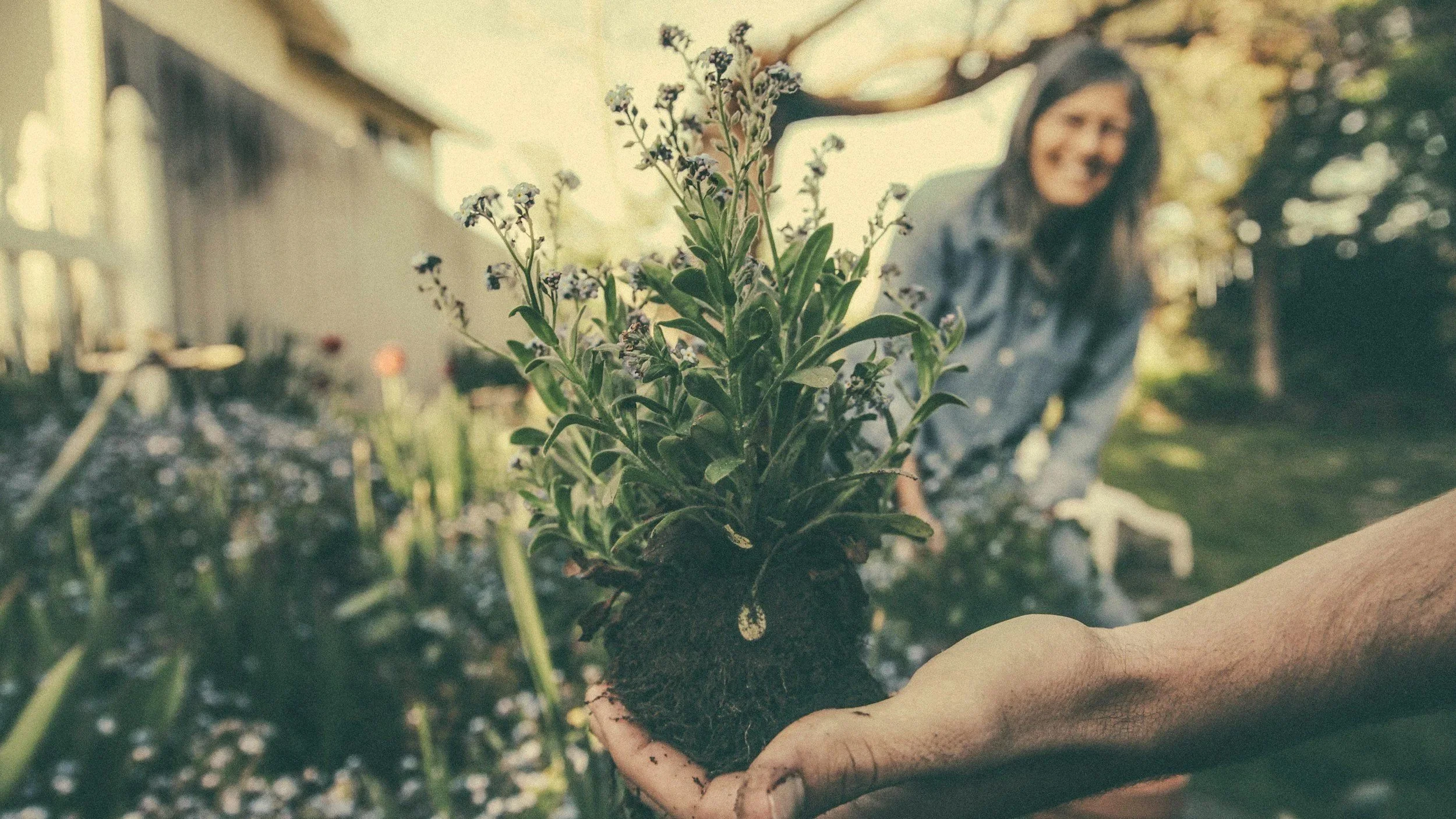
A grandmother, her daughter and her granddaughter share a garden. Same soil, same row of dahlias, same trip to the Cape. Before leaving, the grandmother stakes each stem with a soft cloth and a little slack. Just enough support. She has been gardening for years. Her daughter has been checking the forecast for days. She adds extra stakes, wraps each tie firm and close. She is almost late to the car. The granddaughter glances out the window. The dahlias look fine. Honestly, they look great. She heads out the door.

When they return, the granddaughter's dahlias are face-down in the dirt. The daughter's are mostly upright, but two stems snapped at the tie. No give. The grandmother's are swaying, open, a little wild-looking and entirely alive. The goal of a stake isn't to stop the weather. It's to make sure the plant is still standing when the wind passes. The following summer, the daughter loosens her ties. The granddaughter stakes hers.

In human terms: risk management is putting a few supports in place before change arrives.

So, is it about planning or predicting?

Planning says: wind will probably come. Here's what I'll put in place.

Predicting says: I must know exactly when and how hard, and I must control the outcome.

Predicting is tempting because it can feel safer, but it narrows attention, creates urgency, and can push us toward rushed moves, overcorrections or avoidance.

One is a relationship with uncertainty. The other is a war with it.

When I sit with the women I work with, I eventually ask: What are you actually afraid of losing?

It's almost never the number. It lives somewhere quieter than that.

I don't want to become a burden to the people I love. I want to leave something that matters. I want to stay in charge of my own life for as long as I possibly can.

If uncertainty has been on your mind, try one of the exercises below.

A. The Inner Garden (for the reflective, 15 minutes, pen and paper)

Sit somewhere quiet. Write whatever comes.

  1. What changes (no matter how unlikely) could I experience in the next few years?

  2. Choose one. Is this a planning problem or a predicting spiral?

  3. What's one action I can take this week to feel more ease?

B. Quick Stake (for the doers, 60 seconds)

Three quick questions, no journal required.

  1. What's one thing that could go sideways in the next 90 days?

  2. Do I have anything in place for it or am I assuming it'll be fine?

  3. What's one small support I could add this week?

C. The Body Stake (30 seconds, anywhere for right now)

When you feel the winds of change picking up — a headline, a number on a receipt, a conversation that lands wrong — pause before you respond. Feet on the floor. One longer exhale. Soften your jaw.

You don’t have to solve anything in that moment. You're just choosing not to snap.

About the Author 

Amy Leo is the creator of the Mindful Money approach. She blends finance, yoga and personal development to help women build a steady, empowered relationship with money, especially in a world changing fast. 

As a Registered Yoga Teacher and Financial Therapist, she integrates mindfulness, somatic tools and practical financial education to support both inner steadiness and outer strategy. 

Through group programs, one-on-one guidance and retreats, Amy helps women prepare softly and intentionally for what's next. Her next retreat is June 2026 in the Redwoods. Learn more here.


Nervous System Touch Work to Help Your Body Settle

There is so much going on in the country, the world and in our personal lives that it can be hard to be present, grounded and settled in our nervous systems. While the experience and feeling of stress and activation isn’t bad, and is actually what you should feel in reasonably stressful or traumatic situations, it isn’t good for you to be in this state all the time.

Healing comes from learning to orient more toward the things that feel better, or the things that don’t feel quite as bad. Often this can feel unfamiliar and challenging, and it's a slow process of offering your nervous system a new experience and different options. Over time, we can strengthen our awareness of how to orient to allow our nervous system to soak into the feeling (and hence the healing potential of the parasympathetic nervous system).

One way that we can support this process is with gentle touch work that supports the body in releasing stored nervous system energy, helps the body settle and relax, and brings deep rest. This work is done with you lying on a massage table fully clothed with a blanket, bolster on your knees and pillow to support your body in feeling comfortable. We set an intention for your session and then follow what your body needs. Different parts of the body are gently touched, which supports your nervous system allowing you to relax, settle, rest and feel more present.

After sessions, clients report feeling more like themselves and more grounded. I am offering these sessions as a standalone experience as well as part of a more complete nervous system coaching offering. Please reach out if you would like to learn more or schedule a session.

In these sessions, I use a combination of touch training I’ve received through my Somatic Experiencing Practitioner program and Vagus System, Organ System and Craniosacral Training done locally with Janet Evergreen.

The experience of feeling good is crucial for nervous system health and allows us to show up more fully in our lives.

Investing in Our Past

We’re serving up something different on Rooted Reading today: a guest post from Kwento founder Aidȳn Mancenido. When I learned of Aidȳn’s new business, it reminded me of how much value there is in our stories. Learn about her offering below:

As the holidays have passed and having spent precious time with those I love, including family and friends I don’t see often, I realized just how fortunate I am to be surrounded by such gorgeous humans; many of whom I consider resilient, wise, soulful, and abundantly generous in spirit. I caught up on stories of navigating the challenges of a new marriage; on the heartaches of supporting an older sibling contending with a heroine addiction since the age of 15; and the victory of overcoming stage IV cancer at the tender age of 79. These and many other stories make up the beautiful breadth and depth of our humanity. We are ever-evolving creatures immersed in a strikingly beautiful and kaleidoscopic array of life.

I started Kwento so that I can offer individuals the opportunity to capture some of these unique and impressive life experiences of those we love, including our aging parents and grandparents. I help folks preserve their family history as a legacy for future generations. I interview individuals through a series of 1-hour interviews to identify the threads and poignant elements, then I craft the story, which is shared as a printed book. With over 20 years of experience as a cultural anthropologist and writer, I am invested in documenting histories that lead to greater knowledge and appreciation of our pasts, and therefore, of ourselves.

You can learn more about Kwento at www.kwentome.com, or email me at kwentome@gmail.com.

Free Class for Releasing Holiday Tension: Acupressure Release and Relax

Happy holidays! This year, my gift to my clients, friends, family and anyone who needs it is this perfect 50-minute class for releasing holiday tension and tightness. You’ll need a tennis ball or acupressure ball.

Thank you to everyone who has supported Rooted Wellness & Pilates this year. It’s such an honor to support you. Enjoy the class and let me know if it helped you through the holiday season!


Cultivate a Healing State by Noticing What's Good

The late afternoon light is shimmering though the leaves outside the window at the studio. They are colored orange, yellow and brown, and it feels like fall in the best way. The light shimmers against the hardwood floors, too. As I notice this and the sun on the leaves, I feel a sensation of spaciousness and openness in my body. My breath drops down into my belly. It feels good to just take in this moment. I’m aware of feeling nothing bad or unpleasant in my body for the moment and I feel content. I’m also aware of how simple this moment seems and how valuable, because it has not always been this easy for me and my nervous system to feel ok.

I’ve worked to cultivate my ability for noticing and then to be with the sensations I notice in my body. In this moment, I’m not waiting for the next bad thing that could happen, I’m not on edge from a stressful moment that happened earlier in the day. I’m here and noticing what feels good.

This experience of feeling good is crucial for nervous system health. If you have a history of trauma, it can be hard to notice the good. Our nervous system developed to keep us safe and is prepared for fight, flight or freeze. It is attuned to notice what is wrong. The signals that something is (or could be) wrong get wired into our responses and patterns, and we learn to respond really quickly to what is wrong. This is great for actual danger but not so great for all the smaller stressors we are always experiencing in our modern world (emails, social media, the news and the overall busyness of life).

Our nervous system can become so wired to be on high alert for danger that we can’t relax, we can’t settle after experiencing stress, and we might plan for worst case scenarios or look at life from a pessimistic view point. While this is very common and a strategy for survival, healing comes from learning to orient more toward things that feel better — or things that don’t feel quite as bad.

Often this can feel unfamiliar and challenging, and it's a slow process of offering your nervous system a new experience and different options. Over time, we can strengthen our awareness of what feels better to allow our nervous system to soak into those feelings (thereby healing potential of the parasympathetic nervous system).

If you would like to explore this in your life, please reach out for Somatic Experiencing coaching.